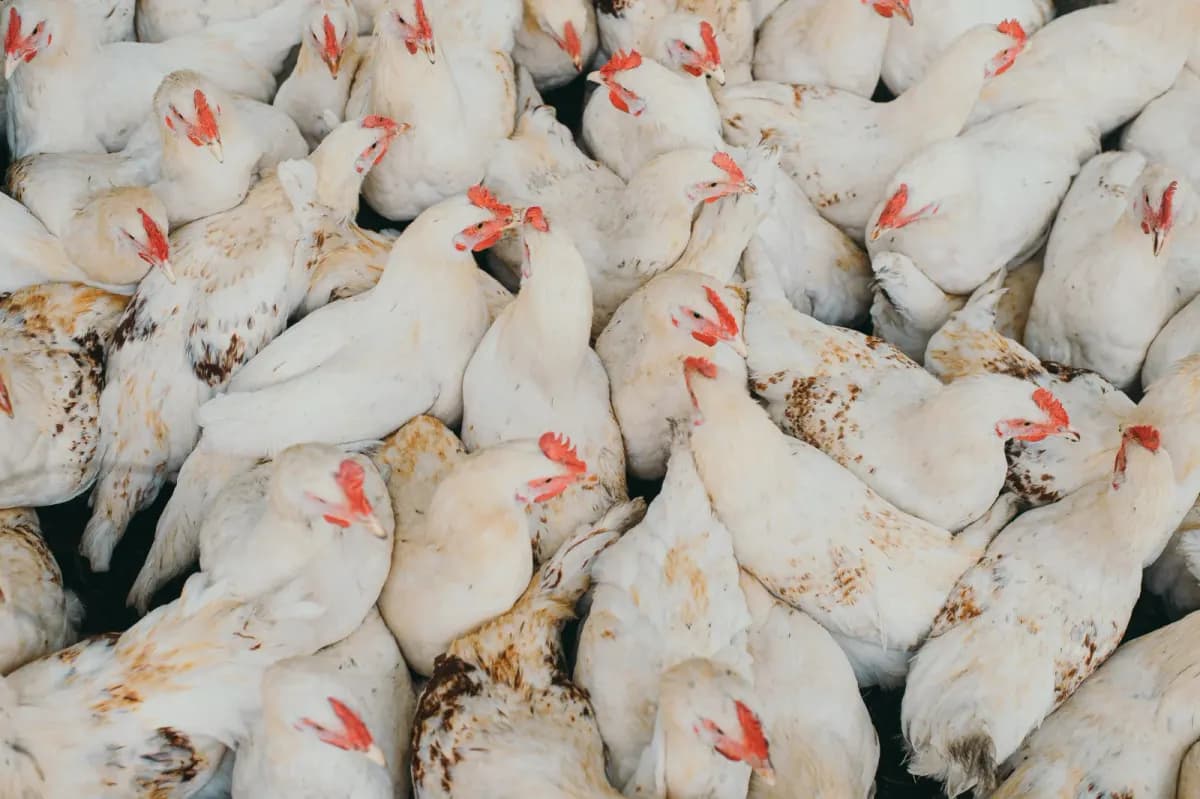
Heat Wahala: Keeping Broilers Alive When the Temperature Hits 38°C

By 2pm, the metal roof was glowing. The birds were panting, wings spread out, eyes half closed. The farmer prayed for rain.
This is March, April, and May in most of Nigeria. Temperatures hit 36°C, 38°C, sometimes 40°C in the north. Broilers from week 4 onwards struggle. Feed intake drops by up to 30%. Some die. The ones that survive grow slower. By market day, you weigh them and your heart sinks.
Heat stress is not a small thing — but you don't need expensive cooling pads to fix it. Here is what works on the ground in Nigerian farms.
1. Roof ventilation matters more than fans
Hot air rises. If your pen has a low, closed roof, the heat traps inside. Open the roof apex. Add a ridge vent. Even a 20cm gap along the top of the long walls makes a huge difference.
Best case: build with a high gable roof, ridge vent, and side curtains. Worst case: cut openings in your existing roof and cover them with chicken wire to keep birds and predators out.
2. Water before feed, always
In hot weather, a broiler can drink up to 4x more water than it eats. The drinkers must always be clean, cool, and plentiful. Add an extra 50% more drinker space than the textbook says.
- Refresh water at 11am — cooler water encourages drinking through the hottest hours.
- Drinkers in the coolest part of the pen.
- Never let drinkers run dry, even for 30 minutes. Once a bird stops drinking in heat, it stops eating, and the cycle ruins growth.
"The day I added a third drinker line in my broiler pen, my feed intake jumped 12% in a week. Same birds, same feed — just water access." — Ifeanyi N., broiler farmer, Enugu
3. Feed in the cool hours, not the hot ones
Birds digest feed by generating heat. If you ask them to eat at 1pm, you are loading them with extra heat on top of the ambient heat. Two-thirds of the day's feed should be eaten before 10am and after 5pm.
Practical: feed at 5am, 6am, 6pm, 7pm. Pull the feeders out (or close them) between 11am and 3pm.
4. Add electrolytes to the water in the worst week
When the heatwave hits, sweating birds (yes, panting is their version of sweating) lose sodium, potassium, and chloride. Replace them via the water. Commercial broiler electrolyte packs cost ₦200-500 and last days. Or mix your own: 1 teaspoon table salt + half teaspoon potassium chloride per 20 litres.
Add vitamin C as well — it reduces heat-stress mortality measurably in published Nigerian studies.
How SmartFlok helps
When you log daily temperature, mortality, feed intake and water intake in SmartFlok, the platform spots the heat-stress pattern early — a drop in feed intake while water intake spikes is the giveaway. You get an alert before the deaths start, while you still have time to add electrolytes and adjust feeding times.
5. Cool the pen with cheap tricks
You don't need cooling pads (though they help). Cheap tricks that work:
- Wet the walls and floor at 10am and 2pm with a hosepipe. Evaporative cooling drops in-pen temperature by 3–5°C for an hour.
- Plant trees around the pen — neem, mango, or moringa. They take a year to grow but they cut afternoon temperatures permanently.
- Whitewash the roof. A coat of white paint or lime wash on a metal roof can drop in-pen temperature by 3–4°C.
- Use shade cloth over the southern wall during dry season.
6. Stocking density — give them space
The biggest mistake in hot season is too many birds per square metre. Standard is 10 birds/m² for finishing broilers; in heat waves, drop to 8/m². Yes, you produce fewer birds per batch. But mortality and growth performance will improve enough to make up for it. Crowded birds in 38°C heat is a death sentence.
The bottom line
Heat stress in Nigerian broiler production is predictable, manageable, and survivable. The farmers who do well in dry season are the ones who plan for the heat instead of praying it away.
Want the tools the smart farmers in this story are using? SmartFlok gives you flock records, vaccination reminders, feed and finance tracking, plus access to the largest poultry marketplace in Nigeria — all from your phone.